Vista Auction
- 3.6
- Rating
- 10.00K
- Installs
- Free
- Price

 Analysis by App-foxy
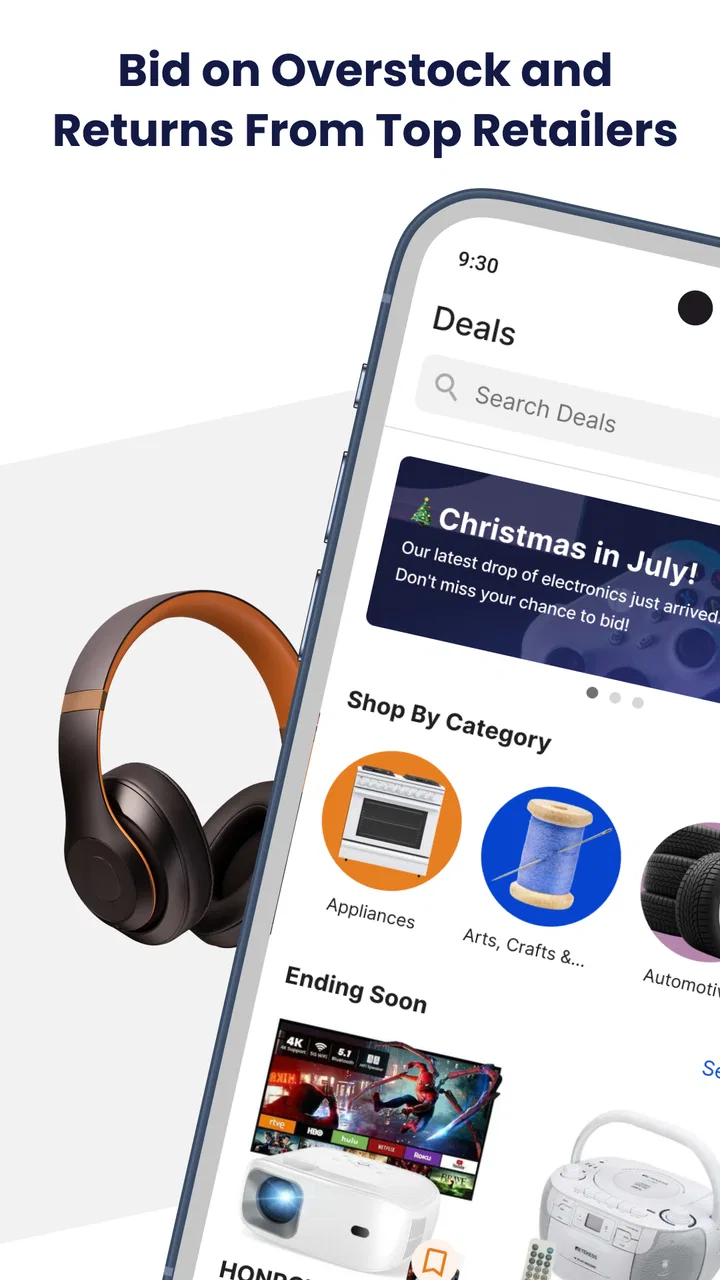
I approached Vista Auction as a local shopping app built around one clear idea: finding items through auctions rather than simply choosing a fixed-price product and checking out. That focus gives it a different feel from a standard marketplace. Instead of browsing only for an immediate purchase, I found myself paying attention to timing, item value, and whether a bid made sense for me.
The app is free, aimed at everyone, and developed by Vista Auction. It belongs in the shopping category, but its usefulness depends less on having an enormous catalog and more on whether the available local listings match what you are looking for. If you enjoy the possibility of discovering something at a worthwhile price, the auction format is the main reason to try it. If you prefer predictable costs and instant orders, the same format may feel like extra work.
Local bidding is the feature that shapes the whole experience
The central capability is local auction participation. That sounds simple, but it changes how I use the app compared with a conventional shopping service. With a normal marketplace, I usually compare listings, check delivery details, and decide whether the displayed price is acceptable. With Vista Auction, the decision is more active: I need to judge the item, consider the current bidding situation, and decide how much attention I want to give the listing.
You May Also Like

 AccuWeather: Weather Radar
AccuWeather Review: A Quick, Clear Forecast for Everyday Decisions
For everyday plans, the best forecast is the one you can understand quickly. AccuWeather makes rain timing, radar, and local conditions easy to act on, with a few trade-offs.

 Hill Climb Racing
Why Hill Climb Racing Still Turns Crashes Into One More Run
A tiny car, a bumpy hill and one more upgrade: Hill Climb Racing keeps resurfacing because its simple chaos makes every near-miss feel personal.

 AliExpress - Shopping App
AliExpress Makes Global Shopping Feel Personal, but Shoppers Bear the Risk
AliExpress turns a global marketplace into a pocket-sized discovery engine. Its reach is useful, its shopping loop compelling, and its trade-offs easy to miss.

 Lords Mobile: Kingdom Wars
Lords Mobile Is a Kingdom-Building Routine, Not a Quick Match
A case-by-case verdict on the building, battles, device demands, and social commitments that make Lords Mobile rewarding for some players and exhausting for others.

 PDF Scanner app - TapScanner
TapScanner Makes Paperwork Easier to Capture, Check, and Share
TapScanner makes scanning with a phone feel less like a rescue operation and more like a dependable step in getting work done. Its capture tools are useful, though not flawless.

 Block Blast!
 Shows How Much a Puzzle Game Can Leave Out
A quiet grid game shows why puzzle players increasingly value instant clarity, repeatable skill and low-pressure play—and where the genre still needs to catch up.
More From Our News Desk
View All News


That makes the app most interesting for people who like the process as much as the purchase. The appeal is not just “find something and buy it.” It is the possibility of spotting a local opportunity and making a careful bid instead of accepting the first price shown. The store summary, “Bid Local, Win Big,” captures that direction, although my experience is that winning depends more on discipline than excitement.
I would not treat it as a replacement for every shopping app. Its value is narrower and more specific. It is better suited to browsing local auction opportunities than to routine purchases such as household essentials, replacement cables, or anything I need immediately. For those jobs, a fixed-price retailer is usually faster and easier to plan around.
Why the local angle matters
Local bidding can make an auction feel more relevant than a huge national marketplace. When an item is connected to a nearby buying opportunity, the decision is not only about the product itself. I also think about whether the location is convenient, whether collecting it would fit into my day, and whether a seemingly good bid remains good after the practical effort involved.
That is one of the first useful habits I developed with the app: I stopped treating the bid as the complete cost of the purchase. Time, travel, and coordination matter. A low winning amount is not automatically a bargain if claiming the item is inconvenient. Vista Auction works best when I evaluate the entire transaction rather than focusing only on the number attached to the listing.
The app has a 3.5 average from around a hundred ratings, with more than fifty written reviews. I read that as a sign of a mixed but meaningful user experience rather than a universally polished one. It has passed the early curiosity stage, with over ten thousand installs, yet I would still approach it as a focused service whose usefulness depends strongly on local activity.
How I use the auction format in practice
My preferred approach is to browse before bidding. I look at the available opportunities, identify items that genuinely interest me, and then decide which ones deserve attention. This prevents the common auction mistake of bidding simply because the current amount looks attractive. A low starting point can create excitement, but it does not tell me whether the final purchase will suit my needs.
I also separate “interesting” from “worth pursuing.” An item can be fun to watch without being something I would actually use. Keeping those categories apart makes the experience calmer and helps me avoid turning casual browsing into unnecessary spending. That distinction is especially useful for anyone who enjoys auctions and is vulnerable to the thrill of competition.
Another practical point is to read the listing carefully before treating a bid as a commitment. I pay attention to what is being offered, where the local connection matters, and what I would need to do after a successful auction. The app’s purpose encourages quick decisions, but I found that the best results came from slowing down at the exact moment the bidding became tempting.
A realistic everyday scenario
Imagine that I am looking for a piece of furniture, a tool, or another useful item and have some flexibility about when I obtain it. Instead of searching only for a fixed-price listing, I can use Vista Auction to check local opportunities during a spare moment. I find an item that fits my needs, consider whether collecting it would be practical, and set a personal ceiling before I become emotionally invested.
If the bidding stays within that limit, the app can offer a satisfying way to shop. I may end up with a useful item at a price I consider fair, while avoiding the pressure to buy immediately. If the bidding goes beyond my limit, the correct move is to leave it alone. The app is most rewarding when I treat that decision as a success rather than as a lost opportunity.
This scenario also shows who should skip it. Someone furnishing a home by a strict deadline, replacing a broken appliance tonight, or shopping for a guaranteed model will probably be happier with a standard retailer. An auction introduces uncertainty by design. That uncertainty is the attraction for some users, but it is a drawback when certainty matters more than discovery.
Small habits that improve the experience
- Set a private spending limit first. I decide what the item is worth to me before watching the bid develop, so the competition does not quietly change my budget.
- Include the local effort in the decision. A bid only looks attractive when the location and collection practicalities also make sense.
- Use browsing as research, not a promise to buy. Watching what appears in the app helps me understand its local usefulness without forcing a purchase.
- Keep a short priority list. Following every interesting listing can turn a focused shopping trip into a distraction. I get better results when I choose only the opportunities that solve a real need.
These habits are not flashy features, but they are where the app becomes more useful. The auction mechanism rewards preparation. Without it, I can spend too much attention on items that were never right for me.
Where the experience has friction
The biggest trade-off is the lack of price certainty. In a conventional shopping app, I can compare the displayed price with alternatives and make a fairly direct decision. Here, the final result depends on the auction process. That means I may invest time in an item and still finish without it, or win it only after the price has moved beyond the level that originally attracted me.
That uncertainty also affects planning. If I need a product by a particular day, an auction is a poor primary strategy unless I already have a backup plan. I would use Vista Auction for flexible purchases, not for urgent ones. This is a meaningful distinction because the app may look like a general shopping tool at first, while its strongest use is more specialized.
There is also a learning curve in judging value. A fixed-price listing gives me an immediate reference point. An auction asks me to create that reference myself. I need to know what the item is worth, what alternatives cost, and how much convenience I am willing to trade for a possible saving. New auction users may find that mental calculation tiring until it becomes familiar.
Local focus can be both a strength and a limitation. It gives the app a practical identity, but it also means the experience may vary depending on what is available near me. A person in an area with appealing listings may find regular reasons to return. Someone who sees little relevant activity may not get enough value from repeated browsing. I would judge the app after checking whether its local opportunities match my actual shopping habits, not merely after installing it.
How it compares with ordinary marketplaces
Compared with a fixed-price marketplace, Vista Auction offers more involvement and less predictability. The usual alternative is better when I know exactly what I want, need a transparent total, or want to complete the purchase quickly. It also makes price comparison more straightforward because the amount is visible from the beginning.
Compared with a general auction service, the local emphasis gives Vista Auction a more grounded purpose. I am not only competing for an item in a distant catalog; I am considering a purchase connected to a nearby opportunity. That can make the outcome more practical, but it can also narrow the range of items worth pursuing. The right choice depends on whether local access is part of my goal or merely an inconvenience.
I would also choose a specialized retailer when product condition, warranty expectations, model accuracy, or dependable fulfillment are more important than the chance of a bargain. Vista Auction is more appealing when I can tolerate some uncertainty and am willing to do the judgment work myself.
Who gets the most from it
The strongest audience is made up of patient shoppers, bargain hunters, and people who enjoy checking local opportunities without needing a guaranteed purchase every time. It can also suit someone who prefers finding an item nearby rather than relying entirely on distant shipping. For these users, the auction process is not merely an obstacle; it is part of the appeal.
I think it can be especially useful for flexible projects. If I am furnishing a room gradually, looking for a practical item without a strict deadline, or willing to wait for the right local listing, the app gives me another route beyond standard retail. The important word is flexible. The more rigid my requirements are, the less attractive the auction model becomes.
People who dislike bidding, tend to overspend when competition appears, or want a complete purchase journey with minimal decisions should probably look elsewhere. The app asks for attention and restraint. It does not remove the work of shopping; it changes that work from comparing checkout prices to evaluating opportunities.
Device support and current position
Vista Auction is free and supports Android devices running version 8.0 or later. Its current version is 1.16.0, so users with older phones should check compatibility before planning around it. The Everyone content rating makes it broadly accessible, which fits the straightforward shopping purpose.
I would not install it expecting a universal replacement for every retail app. I would install it to test a specific question: are there enough local auction opportunities here to make bidding worthwhile for me? That is the most honest way to assess it. If the answer is yes, the app can become a useful occasional shopping tool. If the answer is no, its auction concept will not compensate for a lack of relevant listings.
My final take on the bidding experience
Vista Auction has a clear identity, and I appreciate that it does not try to be everything at once. Its local auction capability makes shopping more interactive and can create opportunities that a regular fixed-price search would not present in the same way. The experience is most satisfying when I approach it with a budget, a practical plan, and patience.
My main caution is equally clear: the possibility of a bargain is not the same as a guaranteed bargain. The app rewards users who know when to bid, when to wait, and when to walk away. It is not the best choice for urgent, highly specific, or certainty-driven purchases, but it is worth trying for flexible local shopping and anyone who genuinely enjoys the strategy of an auction.
Overall, I see it as a focused free shopping app rather than an all-purpose marketplace. I would recommend giving it a fair trial if local discovery and bidding sound enjoyable to you. Just treat every listing as an opportunity to evaluate, not an invitation to spend, and the experience becomes much more controlled and useful.
FAQs for Vista Auction
01What is Vista Auction, and how does it work?
Vista Auction is an online auction platform where users can browse listed items, review descriptions and photos, and participate in bidding from a mobile device. After creating an account, you can follow available auctions, place bids according to the stated rules, and monitor whether you are still the highest bidder. Auction formats, closing times, fees, and payment requirements may vary by listing.
02Do I need an account to place bids on Vista Auction?
In most cases, you can browse auction listings without registering, but an account is generally required before placing bids or completing a purchase. Registration may involve providing contact information and accepting the platform’s terms. Before bidding, check that your profile, payment details, and delivery information are accurate, because winning an auction can create a binding purchase obligation under the applicable auction conditions.
03Are there additional fees when buying an item through Vista Auction?
The winning bid may not be the final amount you pay. Depending on the listing, Vista Auction transactions can include buyer’s premiums, taxes, shipping or collection charges, service fees, and possible payment-processing costs. Always read the complete auction description and fee information before bidding. Reviewing these details in advance helps you avoid unexpected expenses after winning an item.
04How can I pay for an item I win on Vista Auction?
Payment methods depend on the auction organizer, the item, and your location. A listing may provide options such as card payment, bank transfer, or another approved method, together with a deadline for completing the transaction. If you win, follow the instructions shown in your account or confirmation message, and contact support promptly if payment instructions are unclear or unavailable.
05What should I check before bidding on Vista Auction?
Before placing a bid, carefully inspect the item description, photographs, condition notes, measurements, location, collection or shipping arrangements, auction end time, and all applicable fees. Also review return, cancellation, and dispute policies, since auction purchases may have limited return rights. Make sure you understand the bidding increments and set a budget before participating to avoid overspending.
Pros
- Simple interface makes browsing auction listings quick and straightforward.
- Useful search and filtering options help narrow down relevant items.
- Auction details are presented clearly
- including bidding information and deadlines.
- Convenient access to listings supports checking auctions while away from a computer.
- Can help users discover local items and potentially competitive prices.
Cons
- Auction availability may depend heavily on your location and participating sellers.
- Some listings may contain limited photos or incomplete item descriptions.
- Bidding activity can change quickly
- requiring frequent app checks.
- Additional fees
- deposits
- or pickup costs may not be obvious at first glance.
- The app may offer limited value if few auctions are available in your area.

Vista Auction
Gallery